 3 –5 Day Production
 Free USA Shipping
 100% Satisfaction Guaranteed

Fantasy League Traditions That Build Real Rivalries and Lasting Memories
Fantasy League Traditions That Build Real Rivalries and Lasting Memories
Fantasy league traditions are the customs, rituals, and recurring events that keep a league alive season after season. They go beyond weekly matchups and waiver wire pickups. They shape how managers compete, connect, and remember each other for years.
About 40 million people play fantasy football every year in the United States. Most are not just chasing points. They are chasing stories, trash talk, and moments that stick long after the season ends.
So what actually separates a league that survives one year from one that runs for a decade?
Why Fantasy League Traditions Matter More Than the Game Itself
Stats and standings reset every year. Traditions do not.
A league culture built on shared customs is what keeps managers coming back season after season. Plenty of people have bad teams. They still show up because draft day energy, group chat chaos, and inside jokes are worth more than a winning record.
The friendships built around a fantasy football league turn a simple competition into a yearly ritual. Something people look forward to when fall rolls around.
Draft Day: Treat the Season’s Biggest Event Like One
Nothing builds more buzz than draft day. Getting together with snacks, drinks, and some wings makes the annual fantasy draft feel like a real celebration.
Some leagues draft at a friend’s house. Others rent a space or go to a bar. Location matters less than energy. When managers feel like the draft event is a big deal, they treat the entire season that way.
Picking a solid draft location also sets a tone. It signals that the league takes the experience seriously. That feeling carries through every trade, every waiver pickup, and every rivalry matchup for the rest of the year.
How to Set Draft Order in Creative Ways
The method used to decide draft order is one of the most underrated fantasy league rituals. It creates drama before a single player is picked.
Some leagues use trivia. Others use mini golf scores, a bracket tournament, or make the previous year’s loser pick last. Whatever the method, it adds stakes early. That competitive energy spills into the whole season.
Loser Punishments That Fuel Year-Long Competition
Few things light a fire like knowing something embarrassing waits at the bottom. Fantasy football loser punishments have become one of the defining traditions in leagues of all sizes.
Some leagues make the loser wear a costume to the next draft. Others assign a dare, a gross food challenge, or even a standardized test. These punishments start funny. They breed real competitive fire fast. Nobody wants to be that person.
The fear of losing keeps managers engaged even when their rosters fall apart. It keeps the group chat active. It turns mild trash talk into genuine league rivalries that carry for years.
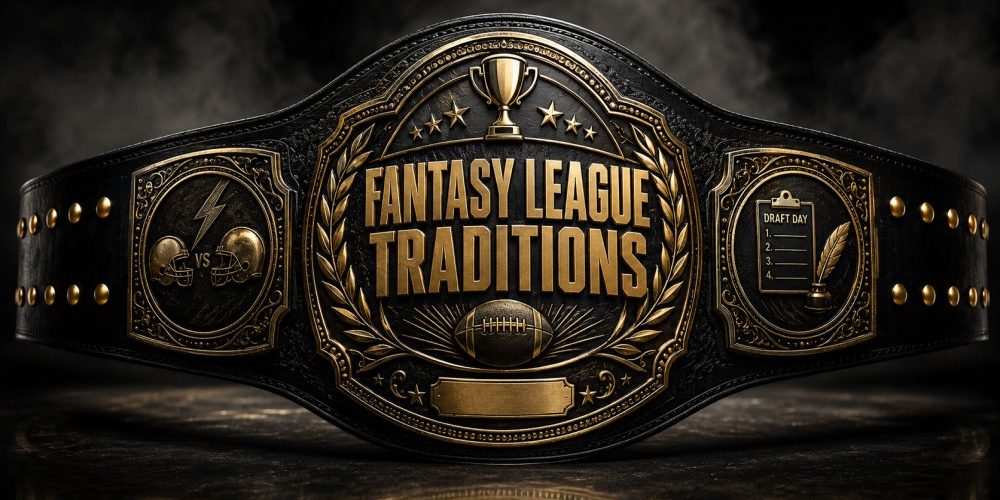
A Handsy custom championship belt for the winner and a funny punishment for the loser creates the perfect balance of reward and consequence working together.
Rivalry Weeks and Head-to-Head Records That Build League Lore
Great fantasy leagues do not just happen. They develop history over time. A dedicated rivalry week speeds that process up.
Some leagues designate one regular season week for specific longtime rivals to go head-to-head. Even managers out of playoff contention care. They want the bragging rights. They want to upset the manager who beat them three straight years.
Keeping lifetime head-to-head records adds another layer. When two managers both know their record against each other, every matchup carries real weight. It starts to feel like a college football rivalry game played every single year.
How Natural Rivalries Form Inside a League
Not every rivalry gets planned. Some grow on their own. Two friends since high school. Coworkers who sit next to each other. Brothers competing their whole lives.
The best fantasy football rivalries grow from real relationships. A good league commissioner notices those matchups and leans into them. Schedule them for rivalry week. Build it up in the group chat beforehand. Let real competitive history fuel the fantasy competition. That is how league lore gets built, the kind people talk about for years.
Championship Belts and Trophies That Make Winning Feel Real
A fantasy football championship that only lives on a phone screen does not feel fully real. A physical award changes that.
When there is something to hold, display, and defend next season, managers fight harder for it. Trophies and belts add real weight to the title. They turn a digital win into a moment. Many leagues use a rotating championship award that passes from winner to winner each year. Every handoff becomes a small ceremony. Every engraved name adds to the league’s history.
A fantasy football championship belt sits on a shelf all year. It starts conversations. It makes the next draft feel more competitive because everyone in the room knows exactly who has it and wants it back.
Rotating Awards vs. Individual Keepsakes
Both styles work well, but they serve different purposes. A rotating award builds ceremony around the title. It gives the win a physical presence in the league’s ongoing story.
Individual keepsakes work better for side awards. Best draft, most points in a week, worst trade of the season. A small custom championship ring or engraved award for each category adds fun without pulling attention from the main prize.
Documenting League History to Deepen the Tradition
The leagues that last longest keep records.
A simple document tracking each year’s champion, draft order, standings, and memorable moments takes minutes to update. In five years, it becomes something people actually read through and laugh about.
A good fantasy commissioner acts as the league historian. Tracking lifetime stats, notable upsets, and award winners gives the group a shared story. Something new members can catch up on and longtime members feel proud of.
Some leagues create a shared folder with draft photos, weekly power rankings, and season recaps. That content becomes the league’s identity. A great fantasy football league is defined by its history as much as its competition.
Frequently Asked Questions
What are the most popular fantasy league traditions?
Draft day events, loser punishments, rivalry weeks, and championship awards are the most common traditions. They keep managers engaged and build long-term memory for the group.
How do I start a rivalry week in my fantasy league?
Pick one week and assign matchups between managers with real history. Promote it in the group chat. Even eliminated teams will care about the result.
What makes a good fantasy football championship award?
A physical, lasting award like a rotating championship belt or trophy passed between champions each year is the strongest option. It builds ceremony and tradition at the same time.
How do loser punishments help build rivalry?
They raise the stakes for everyone. When last place carries a real consequence, managers stay engaged all season, more trash talk, more competition, stronger league rivalries over time.
Why do some fantasy leagues last decades while others fall apart?
Leagues built on strong community traditions last longer. Draft rituals, shared history, physical awards, and personal rivalries give people a reason to return every year beyond the game itself.