 3 –5 Day Production
 Free USA Shipping
 100% Satisfaction Guaranteed

Is WWE Real? The Truth Behind the Spectacle
Is WWE Real? The Truth Behind the Spectacle
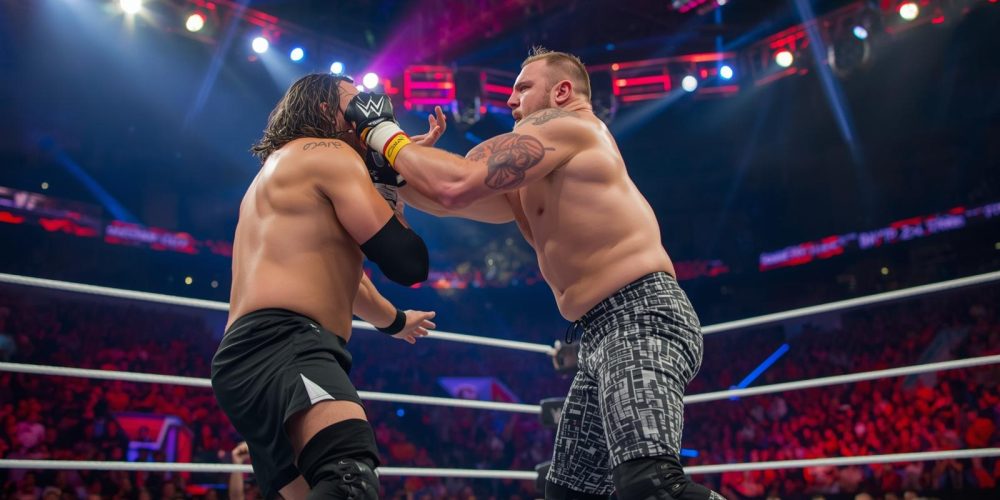
Ever heard your sister call it fake? That earful about wires and padding gets old. Here’s what non-wrestling fans miss: those bumps on plywood aren’t fake. Ask any wrestler who’s stuck finishing a match with their neck screaming. The WWE ring delivers pain that’s 100 percent real, even when results are predetermined. Think of Foley being thrown from heights that make gravity work against human bodies. The misconception isn’t about whether moves hurt; it’s about understanding how much athletes endure night in, night out without an off-season. True wrestling exists where scripted storytelling meets genuine physical damage.
What “Real” Actually Means in WWE
When someone asks, “Is WWE fake?” they’re missing the forest for the trees. Yes, matches are scripted, and outcomes are predetermined, but calling it “fake” is like calling a Hollywood blockbuster “fake” because nobody actually died. The physical competition you witness isn’t some magic trick; those performers endure genuine pain, scars, and injuries that linger long after the arena lights dim. Professional wrestling exists in this strange space where storylines are rehearsed, dialogue is scripted in advance, yet the dangerous bumps, broken bones, and catastrophic accidents are 100 percent real. Sports entertainment demands you accept the fact that scripted doesn’t mean safe, and choreographed doesn’t mean easy.
Where WWE Is Scripted
Behind every dramatic clash lies calculated artistry. Bookers determine who goes over before the bell rings.
The Choreographed Elements
Creative teams craft storylines months ahead, ensuring predetermined outcomes satisfy fans while protecting performers. Rehearsed promos deliver humorous or exciting moments that sell out arenas worldwide. The business demands character development through the booker’s decisions, who take the job, and who walk away victorious. This perfect blend of athleticism and storytelling creates a larger-than-life spectacle where wrestlers entertain through coordinated action rather than genuine combat. Lines are memorized, moves timed precisely, making each entertaining show feel spontaneous while being meticulously planned entertainment.
However, if you are interested in buying belts for your league, then you must check these Customised Championship Belts available at Handsy Championship Belts.
Where WWE Is Brutally Real
Behind the choreographed drama lies an industry that chews up even Olympic gold medal winners. Kurt Angle famously won freestyle wrestling at the 1996 Summer Games, yet called WWE the hardest thing he’d ever done as an athlete.
The Physical Toll Nobody Talks About
Former WWE Superstar and current OVW CEO, Al Snow, explains that every single bump in the center of a wrestling ring creates an impact on your body equivalent to a car accident at 25mph. There are no magical piles of pillows beneath that canvas. Check any video on YouTube to see it’s not true. Drew McIntyre had his head split wide open; CM Punk needed a toolbox during Hell in a Cell. These men and women literally trust their lives every time they head out to perform.
The Price of Entertainment
The risks are real: broken necks, paralysis, concussions, mangled limbs, torn muscles, ligaments, and permanent damage. Athletes face grueling physical demands with a year-round travel schedule, performing on live television shows that air 52 weeks a year with no off-season. Mental fatigue, stress, and exhaustion compound nagging injuries when there’s no time to rest up or see family properly.
The Athletic Reality Behind the Performance
Transitioning from spectacle to substance, let’s examine what truly defines these performers.
Why WWE Stars Are Elite Athletes
Pro-wrestler careers demand cardiovascular endurance that crumbled even professional football players during WWE tryout sessions. Years of training forge the best male and female athletes who possess grit and determination few can match. The rigors extend beyond strength; toughness manifests through nagging injuries that plague performers who tour the world without time off. Inside in-ring training, the first lesson reveals that this dance requires the right rhythm and right time execution, where partners must walk away safely. One move miscalculated sends someone to the trainer’s room. Professional sports team rosters rest during off-days, yet pro wrestling operates 365 days a year, testing the limits of humanly possible endurance while performers remain on tour constantly.
Common Myths Debunked
Wrestling critics imagine extensive padding beneath the ring. Guess what, there’s very limited cushioning. Shane McMahon’s leap of faith, Rikishi falling, and Jeff Hardy taking many swanton bombs from ladders prove that landing hurts on solid surfaces. Anyone who thinks invisible wires are used for free-fall spots, they aren’t. These millions of fans around the globe know performers are genuinely willing to put their bodies on the line for the sake of entertainment. Just these two more absurd claims deserve correction: kids, don’t believe everything along those lines!
The Best of Both Worlds
Millions grasp what I and others have witnessed: rather than dismissing all of it, come to appreciate being part of some of the things that blur reality beautifully. Many people out there who will always view this craft through skepticism miss the point entirely. Well, they don’t necessarily share different perspectives.
Conclusion
Hopefully, people recognize that stated performances aren’t about not really trying. Couldn’t be more committed athletes exist nowhere else. This article proves that being scripted doesn’t diminish what they endure.
So, got your answer and want to make a collection of your own championship belts? Must visit Handsy Championship Belts to buy customized championship belts.
FAQs
Q1: Is WWE scripted or real?
A: WWE matches have predetermined outcomes with scripted storylines planned by creative teams, but the physical toll, injuries, and pain are completely real.
Q2: Do WWE wrestlers get an off-season?
A: No. WWE operates 52 weeks yearly with no off-season, preventing wrestlers from recharging, seeing family, or healing from nagging injuries properly.
Q3: What does WWE stand for?
A: WWE stands for World Wrestling Entertainment. The company rebranded in 2002 after losing a lawsuit to the World Wildlife Fund over trademark rights.